
H.H. Penor Rinpoche
In the upper region of sacred Powo,
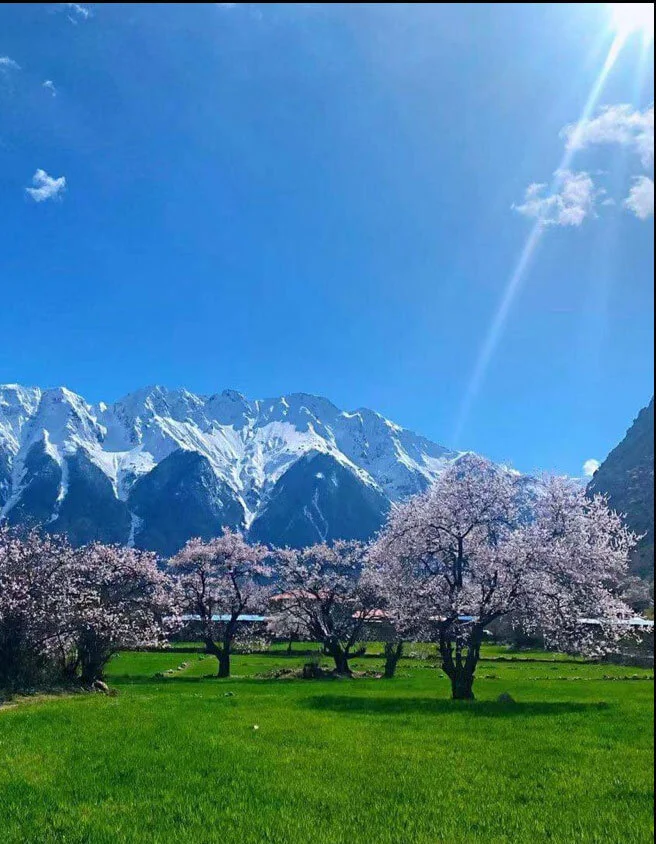
At the foot of a majestic hill,
Surrounded by beautiful trees and lakes,
With a large river flowing from the South,
To a couple bearing the names Sönam and Kyi,
A noble child will be born in the Water Monkey year.
Possessing great qualities, he will benefit the teachings and beings,
I, the fifth Dzogchen, prophesy this.
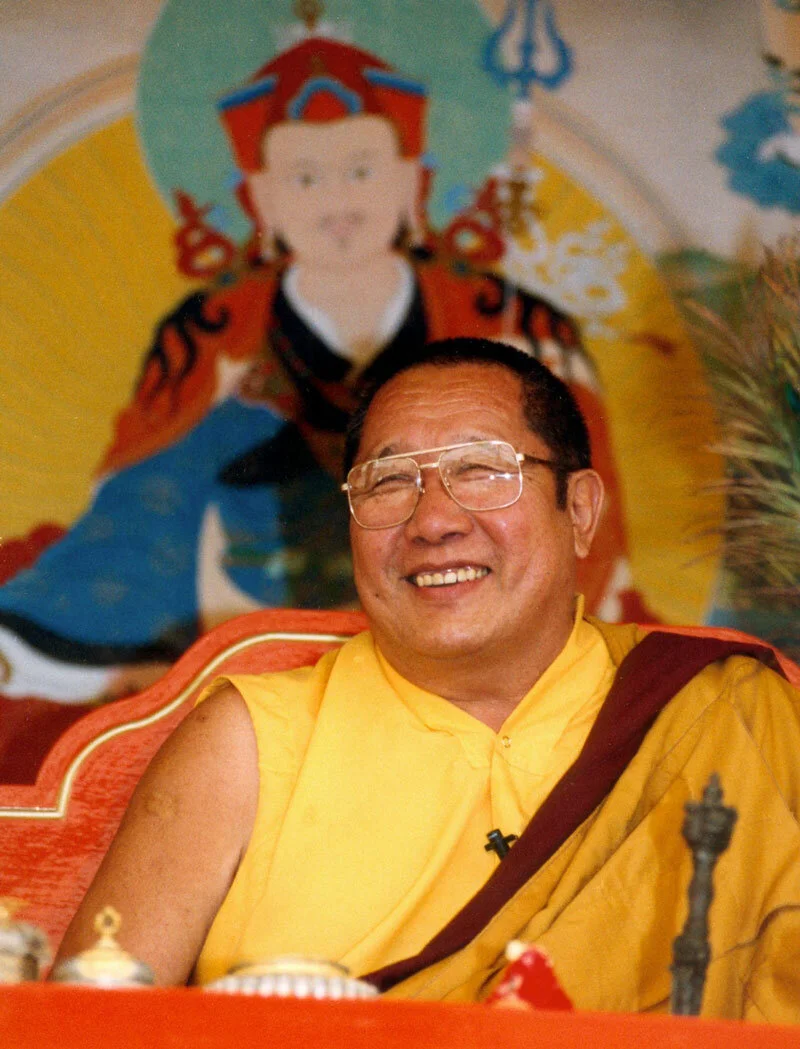
His Holiness Drubwang Pema Norbu Rinpoche (1932-2009) was the 11th throne holder of the Palyul lineage of the Nyingma school of Tibetan Buddhism, and the supreme head of the Nyingmapa lineage from 1993 to 2001.
At the age of four he came to the Palyul Monastery in Eastern Tibet with his family and settled there from the Powo region in East Tibet. Soon after he was enthroned on his predecessor’s 9th throne holder, the 2nd Penor Rinpoche’s golden throne, by the 10th throne holder Karma Kutchen, the 2nd Choktrul Rinpoche and the great Khenpo Ngaga in the presence of other important lamas from 400 branch monasteries all over Tibet. This was a very important historic event, and all present prayed for young Kyabje Penor Rinpoche’s long life and good health, wishing his Dharma activities to reach out in all directions to benefit countless sentient beings.
After Penor Rinpoche had completed his primary education, he became learned in several subjects including writing, poetry, astrology and medicine, and also studied the sutras with very learned and realised khenpos. Aged twelve, he received from Choktrul Rinpoche and the 4th Karma Kuchen Rinpoche the most important transmissions and empowerments of the Nyingma School, including the Namchö preliminary practices, tummo and tsa-lung, and the foundation practice of the Dzogchen.
At twenty one he was fully ordained by his master at Tarthang Monastery following the Vinaya lineage transmitted to Tibet at the time of Padmasambhava by Shantarakshita.
Kyabje Penor Rinpoche entered into retreat for four years with his master Choktrul Rinpoche, a rare privilege granted only to a very few, during which his master gave him all the transmissions of the Palyul tradition: following the secret oral instructions of Tertön Mingyur Dorjé's Namchö, completing all the stages of the practices, accomplishing the Three Roots recitations, and Trekchö, clear light Tögal, inner Tögal practice, darkness practice, and training in the dream state, the nature of sound and the pure realms. He received the Longchen Nyintig cycle, particularly the Great Oral Lineage of Pith Instructions, from the 2nd Nyoshul Lungtok Rinpoche, who was also an important teacher in his life.
HH Dilgo Khyentse Rinpoche once said, “Penor Rinpoche is a saint who has transcended the boundary of samaya".
HH Penor Rinpoche in India
The purpose of fleeing from Tibet in 1959 was to preserve the Buddha Dharma, and Rinpoche did not waste any time in doing this from the first day of freedom. As soon as he arrived in Eastern India in Bhalukpong, he initiated the first Drubchen (intensive practice) of Avalokiteshvara, and accumulated 100 million mani mantra with the participation of newcomers from Tibet. Throughout those 8 days he also gave teachings on the Bodhichitta (enlightenment heart). The Drubchen continues at Namdroling Monastery up to the present day.
After travelling south to Mysuru in 1962, Rinpoche began to build Namdroling Monastery. It was an extraordinary achievement in the face of enormous difficulties, starting just with 300 rupees and a handful of monks. Few masters of Kyabje Penor Rinpoche’s status would have taken on the hardships he endured: first building a temple out of bamboo, living in tents, fetching water from the nearby river, drinking out of a tin can, carrying stones, bricks and sand and mixing cement, his hands bleeding, under the fierce Indian sun, and even cutting his zen (upper robe) in half to share with another lama. His sheer determination and boundless energy drove him on year after year despite being challenged by many obstacles.
He set up a monastic education system similar to the ancient Nalanda University of Buddhism, re-establishing the great living tradition of Nyingma where monks and nuns learned Buddhist philosophies in great depth with at least 9 years of study, followed by entering retreat for 3 years in order to put the theories into meditation practice.
Penor Rinpoche was responsible for developing great scholars and qualified teachers, providing room and board, clothing, medical care and an education in the traditional Tibetan Buddhist canon. Namdroling is now the largest Nyingmapa teaching centre in the world outside Tibet.
Among those who have studied at the monastery are all the major lineage holding tulkus and lamas of the Palyul tradition and the Nyingma in general, including the 5th Karma Kuchen Rinpoche, the 3rd Choktrul Rinpoche, the 3rd Rago Choktrul Rinpoche, and the present heads of Namdroling, Gyangkhang Rinpoche and Mugsang Kuchen Rinpoche, whose spiritual training was guided and directed by Kyabje Penor Rinpoche himself. In 1978 he established the Ngagyur Nyingma Institute (Higher Buddhist Studies and Research Centre), where more than 3000 students from various countries have enrolled and over 1200 have completed their nine-year course. The extremely high quality of training is acknowledged in the many requests for the graduates to teach in different monasteries and centres around the world. After more than 60 years his work is widely recognised, with over 400 requests for teachers from all over the world. To date more than 9000 monks and nuns are registered in the Namdroling sangha of whom more than 3500 are resident.
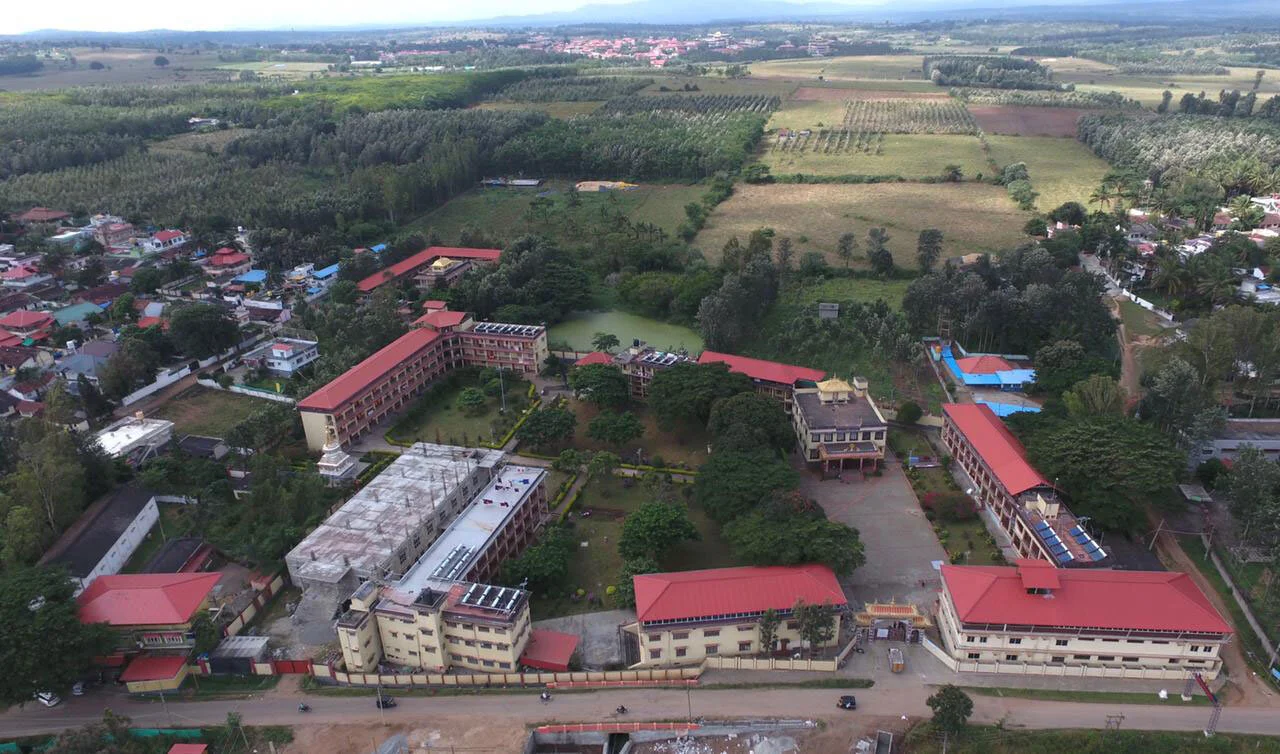
Largest Nyingmapa tradition nunnery outside Tibet in Bylakuppe, including a learning centre (Shedra) and retreat centre
Kyabje Penor Rinpoche’s compassion was not only for his Buddhist followers but also for local Indian communities and sentient beings whom he frequently helped. The farmers regularly suffered from lack of rain, and Rinpoche often performed practices which enriched the whole region, ensuring regular rainfall to produce healthy crops, and is known even today within the local Indian community as ‘The Rain Lama’.
HH Penor Rinpoche’s immeasurable compassion continues
Other expressions of Rinpoche’s care for the region are shown in his sponsorship of local roads and bridges, as well as a clinic that provides infirmary services to the local community. An additional benefit of his activities is that the temples he built attract busloads of Indian tourists every day, increasing the economic activity in the area. In 2021 Penor Rinpoche’s charity foundation provided free Covid 19 vaccinations to the communities around the monastery.
Every year a prayer festival called "Monlam Chenmo" is held in Bodh Gaya, the place of the Buddha's Enlightenment. Recognizing its importance, Penor Rinpoche headed a committee of monks, tulkus and khenpos who organized this annual prayer ceremony, bringing all the Nyingmapa together for the purpose of world peace. The Monlam continues to this day.
Since setting up Palyul Centres in Asia, USA and Europe, starting in the late 80’s, Rinpoche travelled tirelessly, serving the Buddha Dharma and benefitting all sentient beings.
In 2008, having being very sick for the previous five years, during which he had still continued to carry out all his duties for the Buddha Dharma, Kyabje Penor Rinpoche passed away at dawn in his room at the monastery. He entered Thugdham (meditation state) for 10 days, and even though it was a deeply sad time for the monks and nuns, a profoundly peaceful atmosphere dominated the monastery and the surrounding area, and sweet scents were noted around his room, a sign that he had kept monk’s vows throughout his life.
According to His Holiness Chatral Rinpoche’s prophecy letter, Penor Rinpoche’s Yangsi (reincarnated being), was born near Leten Tramo Drag, the sacred place where the Nying-thik Yab-shi (The Four Cycles of Heart Essence Teachings) was revealed.
Based on this prophecy letter, combined with pure visions of Tulku Thubten Palzang Rinpoche, the Yangsi was authentically recognized. On July 31, 2014, the auspicious day of the Buddha’s First Turning of the Wheel of Dharma, the 4th Penor Rinpoche, the Yangsi, was enthroned.He is closely guided by HH Karma Kutchen, 12th throne holder of the Palyul lineage.